About Simatron Studios
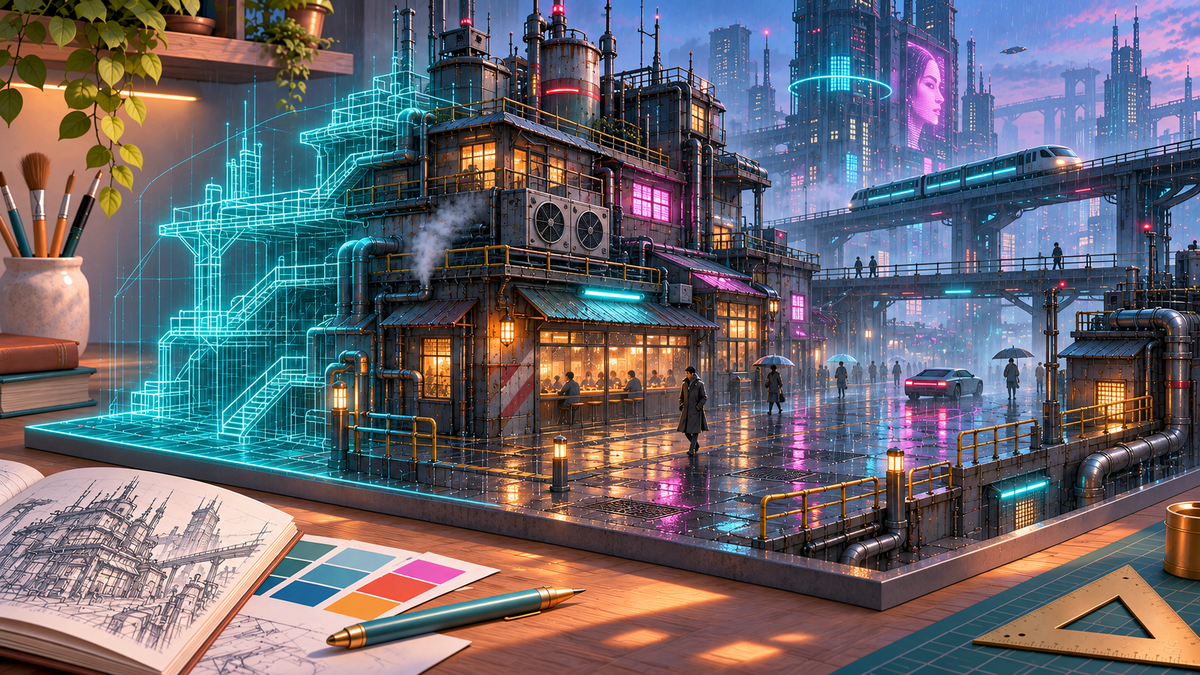
Independent games. Original worlds. Thoughtful design.
Simatron Studios is an independent creative studio founded by Hans Dorries, bringing together game development, visual storytelling, 3D design, and original music.
The studio explores how the worlds we create—and the systems within them—shape the choices players make. Science fiction, cyberpunk settings, and tactical gameplay are particular interests, with room for smaller experiments that test a mechanic, a visual approach, or a story idea.
The Person Behind the Studio
I'm Hans Dorries. My background spans more than 20 years in engineering, simulation modeling, and software development, along with experience teaching at the university level. Across that work, I've been drawn to understanding how things work, solving problems, and helping others make sense of complex ideas.
Game development gives those interests a creative home. A game is a system people can explore: rules interact, decisions have consequences, and small details can change the whole experience. It also offers space for character, atmosphere, music, and discovery.
Simatron Studios is where I bring those interests together. It is a solo-led studio, and this site is a place to share the work as it develops—including the decisions, experiments, and lessons along the way.
What I Create
- Games and prototypes: Gameplay systems, playable experiments, and projects built around a clear central idea.
- Levels and environments: Spaces shaped around navigation, encounters, exploration, and atmosphere.
- 3D models and assets: Objects, structures, and visual elements developed to suit the project and its production workflow.
- Cinematics and visual stories: Short sequences that explore a setting, introduce an idea, or establish a mood.
- Original music and soundscapes: Compositions and ambient pieces that help give a world its identity.
How I Work
I start with a question worth testing. What makes this decision interesting? Can the player understand the space? Does the mechanic create the intended tension?
From there, I build a small prototype, assess what works, and refine it. Early development helps establish the experience before committing to detailed art or larger systems. Scope matters: a focused project gives its strongest ideas room to develop and makes completion more achievable.
My primary tools are GameMaker, Unity, Unreal Engine, Blender, SketchUp, and Rhino. I choose the tools to suit the project, from early spatial studies and hard-surface modeling to playable systems and real-time visuals. That flexibility lets each project develop around its own needs.
Follow the Work
The Devlog follows projects in development, with progress updates and a closer look at design decisions. Insights explores the methods behind the work, sharing practical observations about game design, creative tools, and production workflows.
If you're a player, fellow developer, artist, or musician, I invite you to explore the projects and follow their development. For questions or potential collaboration, get in touch through the site's contact section.